


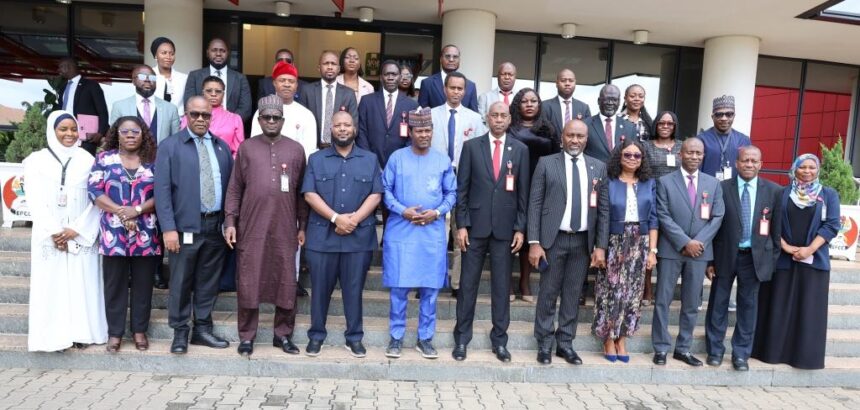
The Economic and Financial Crimes Commission (EFCC) and the Nigerian Financial Intelligence Unit (NFIU) have commenced a three-day stocktake to assess Nigeria’s preparedness for the 2027 Mutual Evaluation Exercise of the Financial Action Task Force (FATF) on anti-money laundering and counter-terrorist financing.
The exercise began on Tuesday, September 29, 2026, at the EFCC Corporate Headquarters in Abuja and is scheduled to continue on September 30 and October 2. It brings together officials of both agencies and other relevant stakeholders to review progress, identify gaps and strengthen inter-agency cooperation ahead of the evaluation.
Speaking at the opening, EFCC Executive Chairman, Ola Olukoyede, represented by the Secretary to the Commission, Muhammad Hassan Hammajoda, said the stocktake demonstrates Nigeria’s commitment to meeting international standards on anti-money laundering, countering the financing of terrorism and counter-proliferation financing.
Olukoyede recalled that FATF placed Nigeria on its Grey List in 2022 over concerns about non-compliance with its AML/CFT/CPFF requirements. He noted that Nigeria was provisionally removed from the list on October 24, 2025, following improvements in its compliance framework, stressing that all stakeholders must work together to prevent the country from returning to the Grey List.

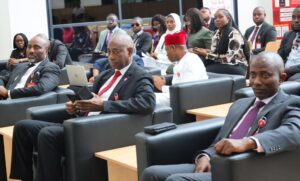
The EFCC chairman said the stocktake would allow Nigeria to assess its progress since the country’s removal from the Grey List and identify areas requiring further attention. He highlighted financial intelligence, asset tracing and recovery, asset management, money laundering investigations and prosecution as key areas for consideration.
Also speaking, NFIU Chief Executive Officer, Mrs Hafsat Abubakar Bakari, represented by the Chief Operating Officer, Law Enforcement Agencies, Emmanuel Sotande, said the exercise was aimed at strengthening the longstanding collaboration between the two institutions. She explained that the stocktake was not being held because of a crisis, but to identify what was working, address remaining challenges and improve the country’s preparedness.
Bakari stressed that the 2027 Mutual Evaluation would assess more than Nigeria’s laws and institutional structures, as international assessors would also examine evidence of effective implementation. According to her, areas such as successful investigations and prosecutions, asset recovery, inter-agency collaboration and the effective use of financial intelligence would be critical to the assessment.
In his presentation, NFIU Chief of Staff, Mohammed Shahid Ahmed, said Nigeria had addressed several deficiencies identified during the 2019 Mutual Evaluation, particularly in financial investigations, recovery of proceeds of crime, international cooperation and cross-border currency declaration. However, he noted that the country had limited time to consolidate its gains before the next evaluation, which will focus on both technical compliance and the effectiveness of Nigeria’s enforcement efforts.
You can get every of our news as soon as they drop on WhatsApp ...To get all news updates, Join our WhatsApp Group (Click Here)